

In the early hours of the day, when the farm is only just beginning to wake up, everything seems calm. The animals are in their places, the work follows its familiar rhythm, and the results appear to depend on dozens of different factors. In reality, however, it often comes down to one thing – forage quality.
Forage is the foundation of milk yield. Not as an abstract concept, but as part of everyday practice – from the way it is stored to the way it is delivered to the animals. This is where the difference between average and excellent results is often found.
When the feed ration is well balanced, the animals eat calmly and consistently. They do not sort through the feed, leave fewer leftovers, and make the most of the available nutrients. As a result, milk yield can increase naturally and sustainably, often by 10–20%, without the need for a significant increase in costs.
However, when quality is lacking, problems begin to appear gradually. The animals start selecting certain parts of the feed, intake becomes uneven, and this leads to lower productivity and additional expenses. These are losses that often go unnoticed until they begin to have a serious impact.
This is where proper mixing plays a crucial role. Even the highest-quality forage loses its value if it is not delivered correctly. A uniform ration means that every bite contains the required balance of nutrients.
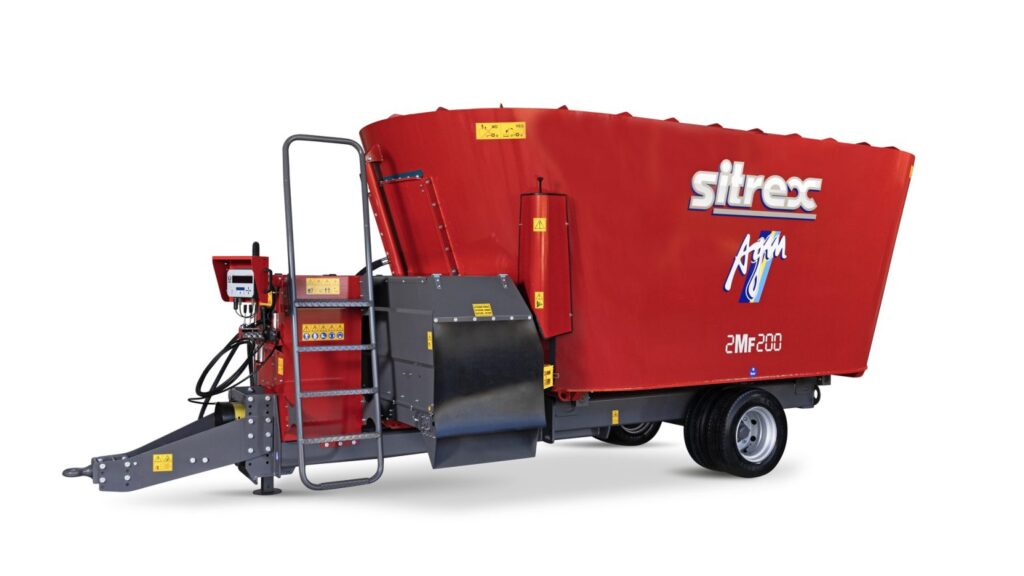
In modern farms, this is achieved through specialised machinery. Machines such as the Sitrex 2MF-140 ensure precise mixing thanks to their two vertical augers. This guarantees a homogeneous feed structure, better intake by the animals, and reduced losses.
Over time, these small improvements lead to significant results – higher milk yield, healthier animals, and improved profitability.
To improve efficiency on your farm, explore the range of Sitrex feed mixer wagons, including the 2MF-140 model, or contact our team for professional advice.